

As a child, waiting for a birthday or the summer holidays could seem endless. Today, the years fly by so quickly that we sometimes find ourselves wondering where the time has gone. This widely shared feeling is more than nostalgia: science offers concrete explanations involving the brain, our physiology and even simple mathematical principles.
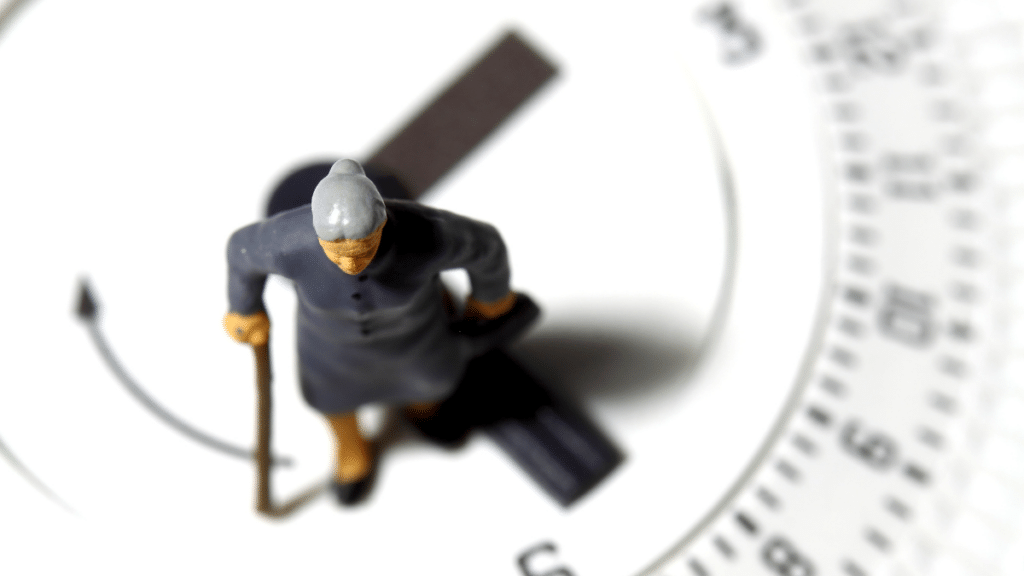
- As we age, the brain processes less information, creating the impression that time passes faster.
- A slower metabolism acts like a slower internal metronome.
- Adult routines, with fewer new experiences, compress memories and shorten our perception of time.
- Mathematically, a year represents a smaller proportion of an adult’s life than a child’s.
- To “slow down” perceived time, seek novelty, travel, learn and practise mindfulness.
The brain’s role in time perception
Time perception depends not only on clocks and calendars but also on how our brain processes information. As we age, neural networks become more complex and then deteriorate, slowing signal transmission. As a result, we receive and record fewer “mental images” during a day than when we were younger.
This reduction in sensory input changes how time feels: the more changes the brain perceives, the more time seems to stretch; conversely, a lower flow creates the impression that it passes faster. This is one of the conclusions proposed by Adrian Bejan, a professor at Duke University, who compares the phenomenon to a film: the higher the number of frames per second, the more detailed and drawn-out the action appears.
People are often amazed at how much they remember from days that seemed to last forever in their youth. It is not that their experiences were deeper or more meaningful, but simply that they were being processed in rapid succession.
Adrian Bejan, professor at Duke University
When the body slows down, time speeds up
Beyond the brain, our whole body slows down with age. Breathing and heart rate, which are faster in children, gradually settle in adulthood. This higher biological intensity during childhood may contribute to the impression of “expanded” time.
This physiological slowdown, combined with declining production of dopamine, a neurotransmitter associated with novelty and pleasure, reduces sensory and cognitive stimulation, which contributes to the feeling that time is speeding up.
Mathematical biologist Christian Yates, from the University of Bath, also points out that this natural slowing of metabolism acts as a less lively internal metronome, reinforcing the impression that time flies.
Routine and the loss of novelty
If childhood seems so long in our memories, it is also because it is filled with discoveries: the first day at school, a first friendship, learning a sport, a holiday somewhere unfamiliar… These memorable events leave lasting impressions.
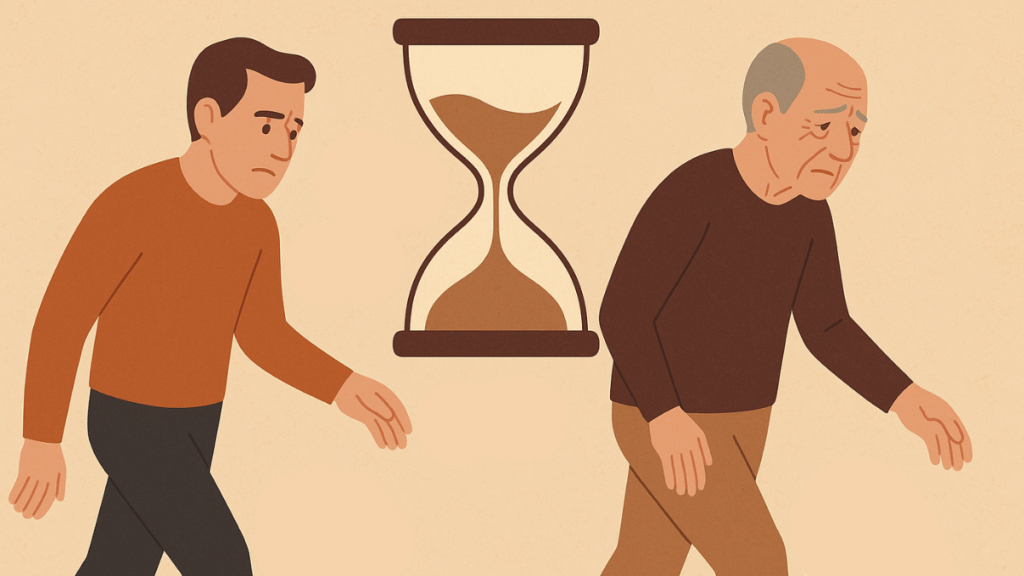
In adulthood, life is often organised around routines. Days resemble one another, the brain records fewer new experiences, and our memory compresses these periods. When we look back on a year, it therefore seems shorter than a childhood year rich in first-time experiences.
Time perception: a matter of proportions
Mathematics offers another interesting perspective. A year represents 20% of a five-year-old child’s life, but only 2% of a fifty-year-old’s life. The smaller the share a year occupies in our life, the less psychological weight it carries.

The five-year period you experienced between the ages of five and ten may seem as long as the period between 40 and 80. (…) Time flies whether you are having fun or not. And it flies faster with every passing day.
Christian Yates, mathematician at the University of Bath
Can we reverse the trend?
Although objective time is unchanging, it is possible to slow our subjective perception of its passage. Neuroscientists and psychologists agree on one point: novelty is essential. Travelling, learning an instrument, trying a new sport or simply exploring an unfamiliar neighbourhood creates more memorable experiences, “stretching” perceived time.
Mindfulness, by focusing attention on the present moment, is another way to give our days greater substance. Taking time to savour a meal, listen to music or observe a landscape can, on a small scale, slow our inner rhythm.
If the years seem to speed up as we grow older, this reflects the combined effects of physiology, memory and lifestyle habits. Reconnecting with curiosity and introducing more variety into everyday life can restore time’s richness and make the years feel, if not longer, at least fuller.
In summary
The feeling that time flies as we age has several causes:
- Neurological: slower processing of visual information (Adrian Bejan).
- Physiological: a slowing metabolism (Christian Yates).
- Psychological: routine and familiarity with the world (Cindy Lustig).
- Mathematical: a year represents a shrinking proportion of the time already lived.
Published by the Editorial Staff on