

From home alarm systems to mobile GPS devices, telecare is gradually expanding its scope. With solutions such as Eliza, Abby, Amy and the i-care® plus app, Careium is developing an ecosystem designed to keep older adults safe without restricting their mobility, while enabling family members and caregivers to play a greater role in their support.

- Careium develops telecare solutions for both the home and outdoor mobility.
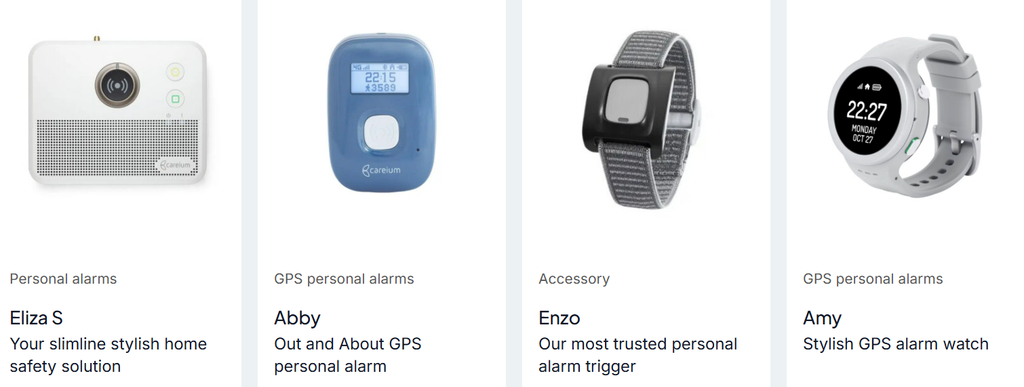
- Eliza is one of its home telecare solutions.
- Abby combines features including GPS, two-way communication, fall detection and geofencing.
- Amy brings several of these safety features to a GPS watch.
- i-care® plus enables family members and caregivers to become more involved in supporting users.
- Telecare is gradually evolving from emergency response towards a connected ecosystem supporting safety, mobility and independence.
For many years, telecare primarily addressed one key need: enabling an older person living at home to quickly raise an alarm in the event of a fall, medical emergency or other critical situation.
That function remains essential. But as ageing in place becomes increasingly important and connected technologies continue to evolve, telecare is taking on a broader role.
The challenge is no longer simply to make the home safer, but to support independence wherever people live, go and carry out their daily activities.
This is precisely the approach taken by Careium, a European telecare provider offering solutions ranging from home-based alarm units to mobile devices incorporating GPS, two-way voice communication and automatic fall detection.
From an Emergency Button to a Complete Telecare Ecosystem
For the home, Careium offers solutions including the Eliza range, which can be connected to a variety of peripherals and sensors. When an alarm is triggered, it can be transmitted to an alarm receiving centre, where the situation can be assessed and the appropriate response organised.
The system can be complemented by various devices, including the Enzo alarm trigger, Vibby OAK S fall detector, smoke and carbon monoxide detectors, as well as other sensors adapted to individual needs.
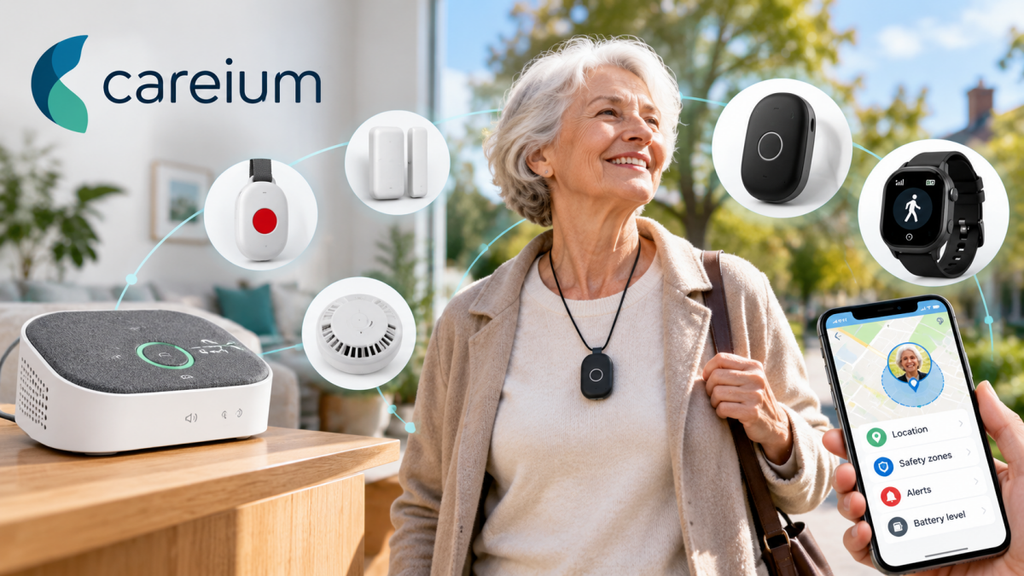
This approach illustrates how telecare is changing: the traditional emergency button is gradually becoming one component within a broader connected safety ecosystem.
Abby and Amy: Providing Safety Without Preventing People from Going Out
One of the most significant changes concerns mobility. After all, supporting people to live independently at home should not mean keeping them confined to their homes.
Shopping, going for a walk, visiting family and friends, or maintaining social activities all contribute directly to preserving independence.
Careium has developed Abby, a mobile device combining GPS, two-way communication and automatic fall detection. The device also supports geofencing, allowing predefined safety zones to be created and alerts to be generated when a user leaves a designated area.
The range also includes Amy, a GPS watch designed to integrate safety more naturally into everyday life. Careium highlights features including GPS tracking, fall detection, geofencing and two-way voice communication.
Behind these technologies lies a central challenge for the Silver Economy: how can we improve safety without restricting freedom?
Bringing Family Members and Caregivers into the Loop
Another significant development is that telecare no longer connects users solely with an alarm receiving centre.
With i-care® plus, Careium enables authorised family members and caregivers to become more closely involved. The app can provide access to information such as the location of a GPS device, battery level, signal strength and event history. It can also be used to manage certain alerts and safety zones.
Multiple family members or caregivers can be connected to the same user, helping to share support responsibilities across a wider circle.
This reflects a broader transformation within the sector: telecare is gradually becoming a coordination tool connecting older adults, their families, caregivers, professionals and monitoring services.
Automatically Detecting Certain Risk Situations
Technology can also reduce reliance on users manually triggering an alarm.
In the event of a fall, for example, compatible devices can automatically generate an alert. This can be particularly important when someone is unable to press an emergency button themselves.
Combined with GPS and geofencing, these technologies can also help respond to certain situations involving disorientation or vulnerability when a person is away from home.
Telecare is therefore evolving from an essentially reactive model towards an approach in which technology can also contribute to detecting potential risks.
Towards More Preventive and Connected Telecare
This transformation was also at the heart of discussions about the new era of connected care at the SilverEco Festival, where Careium was among the companies contributing to the debate on the future of telecare in Europe.
The sector now faces several challenges simultaneously: maintaining ease of use, reducing stigma, improving safety outside the home, involving caregivers more effectively, and making intelligent use of the information generated by connected devices.
The technological challenge is significant, but the underlying objective remains deeply human: using technology to help people maintain their independence, daily routines and freedom of movement for as long as possible.
This may ultimately represent the most important evolution in telecare: moving beyond simply waiting for someone to ask for help and instead creating a discreet environment around them that supports both safety and independence.
Published by the Editorial Staff on