

Recorded at the SilverEco International Ageing Well Festival, this expert roundtable brings together four Silver Economy innovators to explore how artificial intelligence and predictive technologies can transform elderly care. From early risk detection to personalised support, the discussion examines how AI can help prevent loss of autonomy, support care professionals and preserve human connection.

From reactive care to predictive technologies: AI as a tool for prevention
How can care professionals identify the first signs of declining health before an emergency occurs? This is one of the challenges addressed by Deepak Samson, Founder and CEO of Ethelcare. His company has developed an AI-powered virtual care-at-home platform designed to help professionals monitor older people and identify those who may need additional support.
The platform brings together different sources of information, including motion sensors, smart plugs, door and window sensors, wearable devices, care notes and questionnaires. It can also take into account indicators such as walking speed, heart rate and oxygen saturation. By analysing these different data streams, the technology aims to identify changes in daily routines and detect potential signs of deterioration. Rather than requiring professionals to examine every piece of information individually, AI highlights unusual patterns and helps them prioritise their interventions.
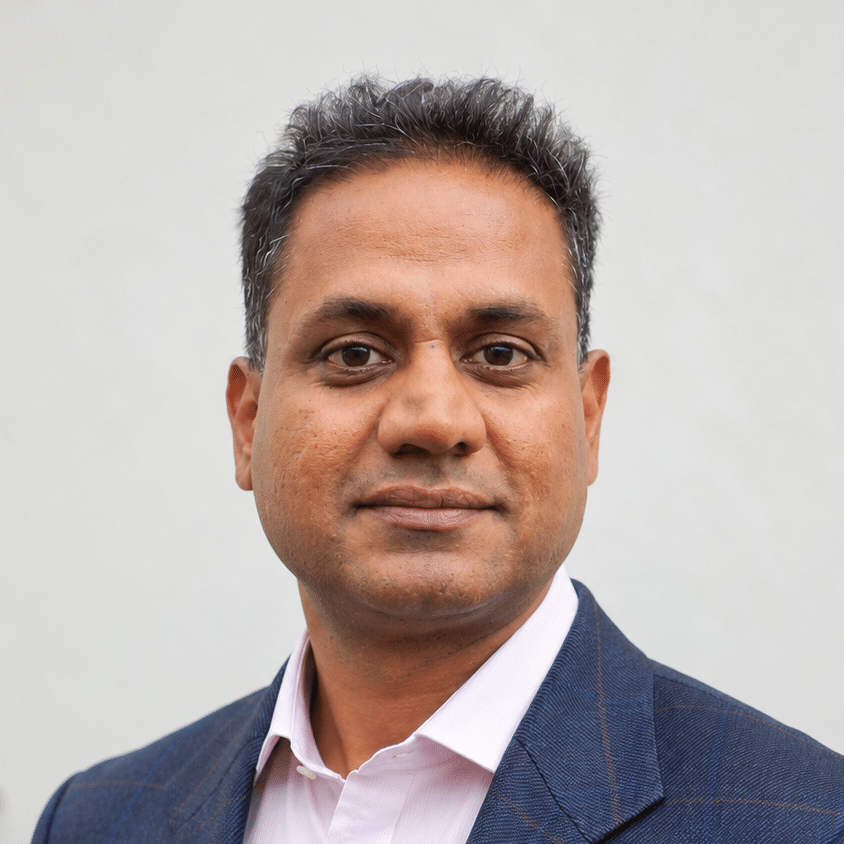
“We need an AI that can sort through all of that and go here’s the 10 people. You really need to focus on right now because they’re at risk of deterioration ”
Deepak Samson, founder & CEO d’Ethelcare
For Deepak Samson, the challenge is no longer simply collecting data, but making it useful to care teams. Faced with growing needs and limited resources, professionals need tools that can identify the people who require attention most urgently. He also points to a structural obstacle: existing funding models often reward the delivery of care after a problem has occurred, rather than the prevention of health deterioration. Developing predictive technologies therefore requires changes not only in technology, but also in the way care is organised and financed.
AI to support care professionals and better understand residents’ needs
The potential of artificial intelligence also extends to the daily work of care professionals. Julia Halilovic, Commercial Sales Lead at Voize, presents a solution designed to reduce the administrative burden on nurses and caregivers. The application uses voice recognition to turn spoken observations into structured nursing documentation directly at the bedside. The information can then be transferred into the patient’s electronic health record, reducing the time spent entering data manually.
Voize reports that its technology can save care professionals 27% of their time. The company says its platform processes between 2.5 and 3 million entries every week and relies on language models developed specifically for the care sector. Beyond transcription, AI can analyse the information recorded by professionals, identify recurring patterns and help them assess whether a resident’s care plan needs to be adjusted. For Julia Halilovic, the objective is not to replace healthcare workers, but to give them more time to focus on the people they support.

“We cannot replace people we either way don’t have”
Jean-Luc Michoud, CEO of Healthcare Wireless Inc
Charlotte Bowen, Sales Director at Pontosense, presents another approach to monitoring older people’s health and safety. The company’s SilverShield technology uses radar sensors to collect information about movement, mobility, walking speed and breathing, without relying on cameras or audio recording. Initially developed around fall detection, the solution is moving towards a more preventive approach, using changes in a person’s usual patterns to identify potential risks. Its Wellness Dashboard helps professionals prioritise situations through a traffic-light system, drawing attention to changes such as altered breathing, more frequent waking during the night or falls.

“We’re collecting a lot of different types of information all with one of our sensors”
Charlotte Bowen, Sales Director of Pontosense
Technology must strengthen human care, not replace it
For Jean-Luc Michoud, CEO of Healthcarewireless Inc, the challenge is to bring together the different technologies used in care facilities within a coherent infrastructure. His solution combines Wi-Fi, infrared location systems and wearable devices to monitor residents’ daily routines. After an initial learning period of approximately one week, the system can identify changes in sleeping, eating, bathroom visits and movement habits. AI then helps care teams detect unusual behaviour and intervene when necessary. Jean-Luc Michoud also highlights the importance of interoperability, arguing that facilities need integrated systems rather than a collection of disconnected technologies.
The company points to reported results of 64% fewer falls and 35% fewer hospitalisations. These figures, presented by Jean-Luc Michoud during the roundtable, illustrate the potential benefits of using data to anticipate risks and adapt care. However, he insists that technology must remain a means of supporting professionals, not a substitute for human interaction. By reducing administrative tasks and helping teams identify situations requiring attention, digital tools should allow caregivers to spend more time with residents.
The discussion, moderated by Caroline Van Zele, CEO of Zembro, also highlighted several obstacles to the wider adoption of AI in elderly care. Concerns about privacy, resistance among professionals, regulatory requirements and the difficulty of integrating new tools into existing organisations all remain significant challenges. Above all, the speakers stressed that predictive care requires a shift in approach: technology can help identify risks earlier, but its effectiveness depends on the ability of care organisations to act on the information available. Artificial intelligence can support prevention and improve working conditions, provided that it strengthens the role of professionals and preserves the human relationship at the heart of care.
Published by the Editorial Staff on